
By S Adeeb Mujtaba Ali

The World Health Organization announced coronavirus disease 2019 (COVID-19) viral infection as a pandemic on March 11, 2020. India is a nation with a large population of over 1.3 billion population, on January 30, 2020, India, announced its (covid-19) first occurrence. The Government of India has decided to impose a countrywide lockdown beginning March 25, 2020, for a period of three weeks until April 14, 2020, social connections and mobility were restricted. In this sense, older adults faced difficulties such as a lack of attendants to assist them with everyday activities, difficulty in obtaining medical assistance, and fear of an adverse path in current morbidity.
Many who are elderly and live in a typical joint family arrangement were able to enlist the help of other family members to cope with new challenges. Since four to five people live under one roof in a typical Indian family. In certain households, one or more individuals over the age of 60 are found, one under the age of 18, and two others in the middle age groups. Three generations are mostly seen living together, with 75% of them sharing the same house. This setup increases the risk of infection through aerosols. It was also reported that neighbors were accomodating the younger adults to quarantine in their premises to protect and save the elderly from infection.
However, the percentage of older people who live alone is steadily rising because their children moved to another city or country to earn a livelihood or to have better standards of living. This senior citizens rely on contracted housekeepers and primary care doctors in their communities for their everyday needs.
According to media reports, the number of individuals seeking support for mental health problems rose by 20% during the first week of the three-week lockdown.
Many Indians are stigmatized by mental disorders, and many tend to pursue treatment by herbal medicine. Multiple national and international actors have participated in mental health advocacy programs, openly announcing their mental illnesses and the benefits of psychotropic drugs, resulting in increased social recognition of mental health services in India.
The latest COVID-19 virus pandemic has resulted in a surge in demand for psychiatric assistance. There are approximately 8000 mental health practitioners in India, the majority of whom work in cities. Mental health professionals are not readily available to aging people. They are prone to feelings of isolation and powerlessness. And if they survive the pandemic, they worry that the social order will be disrupted.
In this scenario, the measures taken up by the governments and non-government bodies are commendable like moderating the news, crime cases, arrangement of virtual communication platforms for the elderly on zoom and Whatsapp calls, counseling helplines created by a cohort of mental health professionals, etc.
Such online measures, prove to be fruitful, especially for the aged, those with mobility problems, anxiety, and depression, those who lack access to healthcare, and those who live in rural areas. When harnessed, internet access for older adults will assist in the formation of online community groups, video therapy, and the development of medical and rehabilitation resources. The COVID-19 pandemic may thus turn out to be a blessing in disguise, hastening the deterioration of healthcare resources and access for India's population, especially the elderly.
Reference:
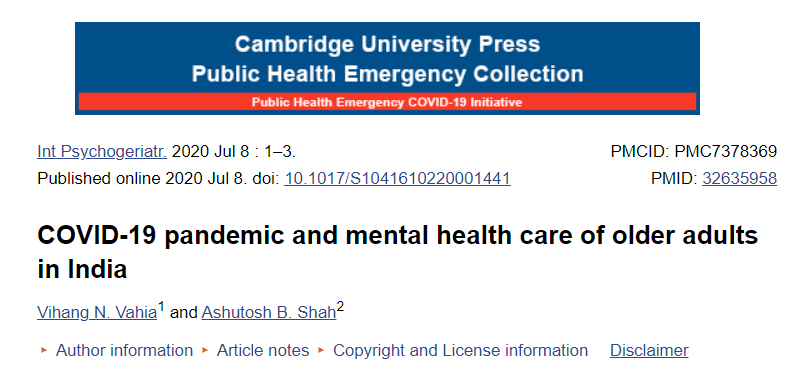
- Vahia, V. N., & Shah, A. B. (2020). COVID-19 pandemic and mental health care of older adults in India. International psychogeriatrics, 32(10), 1125–1127. https://doi.org/10.1017/S1041610220001441
Comments
Post a Comment
Share your views about the blog